Tuesday, 22 December 2009

Evaluation - How did you use new media technologies in the construction and research, planning and evaluation stage?

I have used various new media technologies throughout the whole process of my coursework. Below I will state each one and explain how I used it and for what purpose.

Scribd.com


  • This is a document upload site which enables you to upload word documents and embed them onto sites such as this one.
  • It's quite easy to use all you have to do is create an account on Scribd then just choose upload and select the document you want to upload.
  • I've used this on my blog to break up text and make it more appealing on the eye.
  • I have also used it for a genre research table that I have done as tables cannot be done on normal posts on Blogger.
  • http://lornasa2bloggy.blogspot.com/2009/11/genre-research.html here's an example of the use of Scribd on my blog.
  • Being able to use a new media technology on my blog like Scribd means it allows me to produce a blog that i much more appealing on the eye.
Podcasts


  • We chose to try using this concept of a Podcast to speak about what we'd done so far in the week and the plans for the week ahead.
  • We saw it as something a bit different to put on the blog compared to us just writing notes, it would be a more interesting way of communicating to viewers of our blog.
  • This enabled us to be more interactive with our blog.
  • Here is our first Podcast: http://lornasa2bloggy.blogspot.com/2009/11/podcast-51109.html

Facebook

  • We used Facebook to get our audience feedback.
  • We uploaded our final cut teaser trailer onto the networking site and asked for comments from our 'Friends.'
  • It was an affective concept to use as there is a wide audience.
  • By using this networking site it meant we had a variety of feedback from different people from different backgrounds and also saved us time as if we couldn't have used Facebook we would of had to ask people personally to give us feedback.
Blogger

  • I've used Blogger to keep an account of my process in my coursework and to keep a record of research as well.
  • This is an easier way to process my coursework as it is all done in one place which can be accessed on any computer.
  • You can also upload videos and have a much more interactive way of presenting your coursework.
  • Using a blog to present my coursework rather than simply writing it up means that it is more appealing and interesting to viewers and it's also easier to keep a constant live log of everything I have done.
IMDB

  • IMDB is a movie database website which has all sorts of details on a variety of films.
  • There are details such as budgets, box office figures, actors etc...
  • This website has been very helpful during the process of producing my coursework.
  • The most helpful details I have got from the website are the budget and box office takings for films similar to mine such as Pride and Prejudice and Becoming Jane, I have used these figures in my intertextual research.
  • If I didn't have access to these sort of details I would struggle to understand the genre that I have worked in (period drama) and therefore find it a struggle to produce my final piece with a detailed understanding in terms of my target audience.
Photoshop ELEMENTS 2.0

Below are some screen shots that show these two processes:


  • The images used at the bottom of the magazine front cover all had backgrounds. We therefore erased the backgrounds so that the images wouldn't look out of place on the new background.
  • To get the specific layout for the magazine front cover we used the layers pallet to arrange the layers.
  • Without using Photoshop the ancillary texts would be nowhere near the quality they are and multiple images wouldn't bee able to be used.
iMovie


  • We edited and produced our original teaser trailer on iMovie.
  • Its quite simple to use and has a variety of tools such as transitions that can be very effective.
  • In one of my previous posts I have gone into more detail of the positives and negatives of iMovie: http://lornasa2bloggy.blogspot.com/2009/12/software_21.html
iDVD


  • Using iDVD meant we could produce a professional looking DVD.
  • iDVD produces a 'start' page for your DVD so it comes up with he option 'play movie.'
  • It just helps to finish off the DVD.
Audio Recorder


  • We used this to record our soundtrack and our voice over.
  • The recording quality is very good and is easy to use.
  • Using this piece of new media technology was better than using a camcorder to recorded audio as it gives a sharper more precise finish.
Camcorder


  • We used a Canon digital camcorder MD101 which we recorded onto a DV tape.
  • It was easy to use and overall gave good results.
  • The camcorder had a zoom, the footage filmed was clear and of good quality.
  • However we have encountered one problem with the camcorder. After editing our final improved teaser trailer we realised there was a subtle clicking sound in the background. After testing the non-diegetic soundtrack we could rule out that the clicking noise wasn't from the downloaded soundtrack. We therefore concluded that although we have deleted the sound recordings from the footage the clicking noise was from the camcorder itself. Although the clicking noise is faint it is still a disappointing flaw with the camcorder which has affected the quality of our final teaser trailer.
  • I have written further information about the camcorder on a previous post: http://lornasa2bloggy.blogspot.com/2009/12/hardware_21.html
Scanner


  • We used a scanner to upload our storyboard.
  • Using the scanner meant that we could upload our first storyboard along with the pictures we drew to represent shots
  • Here is the storyboard we scan into the computer then uploaded onto the blog: http://lornasa2bloggy.blogspot.com/2009/11/storyboard.html
YouTube


  • I used YouTtube to view teaser trailers for different films but especially the genre of period drama.
  • I then analysed the trailers for my genre research.
  • YouTube is an easy video search engine that is quick and efficient to use.
  • If I hadn't of used YouTube I would of had to have searched for teaser trailers which would have taken more time.
  • Although one problem was that if I wanted to use YouTube I had to use it at home as it is blocked on the school computers.
Final Cut Express


  • We edited and produced the whole improved teaser trailer using Final Cut.
  • By using this program rather than iMovie we could edit our final piece more effectively.
  • To edit the clips we used the razor blade tool to cut the clip into parts then just deleted the parts that we didn't need.
  • Another example of editing using Final Cut Express is that in one of our shots there was a mini bus in the background, by using Final Cut we were able to zoom in on the footage within the program so the mini bus couldn't be seen in the mise-en-scene.
  • We were also able to increase the brightness in two shots that were filmed at night which we deemed too dark for the viewer to see the character in the frame, this is something we were unable to do in iMovie.
  • Also by using Final Cut Express we were able to incorporate a split screen into the improved final teaser trailer which was something we were unable to do in iMovie.
  • This was a complex and time consuming process but I believe it adds something unique and interesting to the trailer.
  • There are more details about the different techniques we used in Final Cut on one of my previous posts on Software: http://g324lornakennedy.blogspot.com/2009/12/software.html

Live Type

  • With iMovie you can produce your titles within the program where as with Final Cut Express you have to produce them in a separate program called Live Type
  • We decided to upload footage that we filmed by accident of the sky and put the titles over it to create a unique way of presenting the titles.
  • For the titles introducing the actors we had to upload the footage we wanted the titles on then add the titles on top of the footage, we then had to export the footage from Live Type back to Final Cut Express.

Free Play Music

  • For the soundtrack for the improved teaser trailer we downloaded music from a copyright free website.
  • This was fairly easy to do as we just downloaded it into iTunes then dragged it across to Final Cut Express.

Below is a podcast with details about the use of new media in our coursework process.


Below is a video of us demonstrating how to use Blogger and Final Cut Express:


Evaluation - What have you learned from your audience feedback?

We seeked audience feedback at different stages of putting our teaser trailer together. Once we had produced our rough cut we showed our teaser trailer to people in our class. Audience feedback is a vital process of editing and producing a film even big budget films. An example is Bridget Jones Diary. When a scene from the film was one where the male actor turns to face the camera and is wearing a stereotypical Christmas jumper was shown to a small American they didn't get the comical aspect. This made the producers realise that they would have to change aspects of the film to appeal to an American audience. Another example that is more specific to our genre is Pride and Prejudice. When producers showed the film to an American sample audience they didn't understand the ending of the film as their isn't a kiss between the main female and male protagonists. So from this feedback the producers filmed an alternative ending for the American audience which had the main male and female protagonist sharing a kiss to give clear anchorage that they were together.

This is some of the feedback we got and how we addressed the negative feedback:

Some of the shots are too dark.
Due to the problems with our location we were working to a tight time schedule. Therefore when we shot some of the footage it was darker than we would have liked. These are: the mid shot of the gentleman, the mid shot of the main female protagonist and the gentleman and finally the over the shoulder shot of the main female protagonist laughing. Again due to the time schedule we didn't have time to re-shoot these shots, we also considered starting to edit in Final Cut but after much deliberation we decided this wasn't an option due to time. Therefore we decided to use a 'wash in' transition so that the trailer fades from a white background to a dark shot. Doing this means that the viewers eye is adapted to the colour change slowly so that the content in the shot isn't as difficult to see.

More anchorage needed to show its a teaser trailer.
The rough cut doesn't have any non-diegetic music or title cards with text. As it is a rough cut we still had these to add however it made us consider that more anchorage was needed. So we added more title cards to signify the story in more detail and also to give the viewer a further insight into the main female protagonist feelings and emotions.

More anchorage needed to explain the story as there's no diegetic voice or non-diegetic voice overs.
When we began planning our teaser trailer we debated whether to have a non-diegetic voice over or not. We decided not to but agreed to consider adding a voice over if audience feedback suggested we needed one. This is what has been suggested that we need a voice over. We decided to use the main female protagonist's voice. Not particularly to tell the story but more to give the viewer an insight into her view of the story.

Final Piece

Although we've made changes to address the problems highlighted through our audience feedback there are still flaws in our final piece. Some of the shots we would have liked to have re-shot due to the lack of light. We would also of liked to have added some extra footage of the 'love triangle.' Regarding the soundtrack we would of liked to of had a piano accompany the flute as it would of added further drama to the teaser trailer.

Improved final piece

After producing our final product we decided that we would try and address some further issues that were highlighted through audience feedback and correct these negative aspects. After making this decision we decided to seek further audience feedback so that we could address as many flaws with the trailer as possible.

Below are some of the new points from audience feedback and how we addressed them in producing a new improved teaser trailer:

  • Too few set-ups within the trailer, make more of a love triangle

We addressed this by developing a new situation/set-up between the main female protagonist, the main male protagonist and his fiancee. We hope that this gives more anchorage of the plot to the viewer and adds more drama to the trailer. We also decided to make the main female protagonist appear more as a maid as this would create more drama and hopefully convince the audience to see the film. We decide to have the main female protagonist taking a letter to the fiancee of the main male protagonist with him stood beside her. We had the two main protagonists glancing at each other to signify a relationship between them.

  • Not enough variety of shot types

We took this into account when we filmed the new set-ups and saw this as an opportunity to correct it. We decided to get further over the shoulder shots and varied the shots by having a mix of long, short and medium shots. We believe that adding these new shots has addressed this problem.

  • It could be shorter as it is a teaser trailer not a 'normal' trailer

We took this into account and the improved teaser trailer is 1min5secs which is nearer to the average length of a teaser trailer. Although as we have added more shots to this trailer we have cut the length of each shot meaning it is a shorter teaser trailer.

  • Consider using two pieces of music, it could help to emphasise emotion

Originally we had one piece of non-diegetic music over the trailer. Feedback suggested this didn't work as it was a too simple piece, also after looking again at other teaser trailers we realised they usually use two pieces of music. Therefore we decided to use two different pieces of music from a copyright free website. We believe this helps to heighten emotions in the trailer.

  • Consider framing of shots

We have addressed this by shooting more over the shoulder shots which create affective framing. We framed one shot with a double over the shoulder shot which the main female protagonist can be seen through, this signifies a love triangle to the audience. We also used tree branches to frame the first shot of the the improved teaser trailer.

  • Could add more pace towards the end of the trailer to add drama

We have done this by shortening the length of the shots at the end of the teaser trailer and also included faster transitions. The non-diegetic music at the end of the trailer is also faster therefore giving the impression to the audience that the pace of the trailer has increased.

  • Didn't think the titles worked

We have addressed this by removing the written quote titles. After much consideration we decided that these added too much confusion to the trailer and also slowed the pace too much. We have also improved the title cards and the actors names by making them more interesting. We have put the title 'For All I Know' and 'Coming Soon' over footage of moving branches in the wind. We also placed the actors names over footage of the actors themselves. By doing this we have quickened the pace of the trailer and we hope this will keep the audience interested in the teaser trailer.

  • Jerky shots

To ensure we didn't have any 'jerky' shots in the improved teaser trailer we cut the shots so that the 'jerkiness' cannot be seen anymore. In terms of filming our new footage we checked the tripod before we used it to ensure it wasn't faulty and then used the tripod to ensure we had a steady shot where possible. Obviously the rotating shot couldn't be shot using a tripod however the shakiness of the camera adds to the effect of the shot type.

  • Some shots are too dark

This point was picked up on in our initial audience feedback. However we were unable to correct it as we were using iMovie and it didn't have the facilities for us to lighten the footage. Although when we decided to improve the trailer we also decided to use FinalCut which is a more sophisticated editing program. Therefore we were able to increase the brightness of the shots that were deemed too dark.

For our new improved teaser trailer we received audience feedback not only on the finished piece but also the drafts. We decided to film the viewing of one of the drafts and we also recorded what they had to say about the trailer so far. Here is the link to the video - http://g324lornakennedy.blogspot.com/2010/02/audience-feedback-for-2nd-draft-of.html

Below is some of the points audience feedback picked up on the improved final teaser trailer:

We also collected audience feedback for our film poster and magazine front cover as they are very important pieces in terms of a marketing strategy.

Below is a video of audience feedback. We screened the original trailer and then the improved trailer. We asked them to establish what they thought had improved and what they would do to the new trailer to improve it further.

Below is some of the feedback we received for the film poster:

  • The spacing of the writing could be improved
  • Consider adding the film website address
  • Not enough font variation
  • There are no quotes from reviews

Below is some of the feedback we received for the magazine front cover:

  • Framing could be improved - consider putting the stories down the pillar
  • Is the image right? The image is a bit dull
  • Too many plain areas - more detail needed
  • Need to add website address and issue number

After receiving the feedback for our magazine front cover we realised that our cover didn't fit with the codes and conventions of film magazines front covers. Therefore we decided to develop our magazine front cover further.

Below is the feedback we received for our new improved magazine front cover:

  • The colours chosen for the text and blocks for the pictures link with the main image used, it brings all the different aspects of the cover together.
  • The main image is a allot brighter than the previous main image, it attracts the eye of a passer by.
  • One criticism was that the film titles at the bottom of the cover could be spaced out more effectively so that the titles can be seen more clearly.

Evaluation - How effective is the combination of your main product and the ancillary texts?

Producing a teaser trailer is in fact just another marketing strategy to make your film successful. To accompany our teaser trailer we developed a teaser poster, a main film poster and a magazine front cover.

A teaser trailer is a form of media that would typically be shown either on TV during ad breaks, in the cinema before a film (of a similar gene to that being advertised) or on websites such as YouTube. So therefore teaser trailers accommodate the interactive market.

However a film needs a presence elsewhere too. For example on Billboards and advertised in
magazines (type depends on the target audience of the film) such as Closer and Look for the genre of our film and our target audience. This is wear our main film poster would appear.

Another market that also has to be addressed is the audience with a great interest in film, those who buy specialised film magazines, our magazine front cover featuring our film addresses this audience.

It also has to be considered that a film featuring on a film magazine front cover means that the film has been publicised enough to be 'worthy' of front cover space. This means that this type of publicity confirms that your marketing strategy has been successful so far. The genre of the magazine your film is featured in is also important. For example if we were to produce a magazine front cover with copyright images we would have featured films that were of a similar genre of our film such as Remember Me and Eclipse which are romantic dramas. This again would link to reaching the target audience of the film.

The teaser trailer, main film poster and magazine front cover all have the same basic aspects that will attract the target audience. They all link together as a 'brand' for the film and if put into action would hopefully attract the target audience efficiently and effectively.

The podcast below gives more detail about the teaser poster, main poster and magazine front cover.


The video below gives more details about how the magazine front cover, poster and final teaser trailer work together:


Evaluation - In what way does your media product use, develop and challenge forms and conventions of real media products?

In the process of developing our teaser trailer I have researched many different teaser trailers from horror to romance. Then as we decided to concentrate our genre on period drama I specialized my research on this genre.

In general, a teaser trailer's main aim is to purely advertise a film and its release. It is stated that the length of a teaser trailer is approximately 30 to 60 seconds long but while looking at other teaser trailers this doesn't seem to be a fixed rule. For example The Duchess teaser trailer is 1.49 minutes long. Our teaser trailer, in total is 2.07 minutes long which is possibly a bit too long so if we were to improve our trailer this is something we could look at, shortening the length.

Another factor that I discovered after researching teaser trailers is the importance of including narrative enigma's. So therefore we included some narrative enigma's in our trailer one being: does the main female protagonist end up with the main male protagonist? We hope that a narrative enigma as influential as this to the plot of the film will attract our target audience and convince them to see the film at the cinema.

Looking at teaser trailers that were of a similar genre as our teaser trailer was the most vital piece of research I did as they had the biggest impact on our trailer.

These are aspects of our trailer that were influenced by my genre research (I will also state the influence the research had on our trailer):

Editing
After looking at a variety of period drama trailers I realised that the editing is always smooth and never too fast.
Although I did realise that as the trailers develop the speed of the clips and transitions do pick up pace and we tried to incorporate this into our trailer
Another factor that I realised was that the transitions in the trailers are always fade ins and outs we also incorporated this into ours except for the dark shots when we used wash In's but this is still a subtle transition so I believe it still fits with the conventions of a period drama teaser trailer.
After looking at the trailer for The Duchess I realised the importance of framing shots, so we concentrated on this for example using the trees in the woods to frame the main female protagonist and using the pillars at the Ball scene.
When we decided to improve our teaser trailer we took inspiration from the 500 Days of Summer teaser trailer. For example the beginning scene where there are two shots of the same situation but just from different angles. We incorporated this in our trailer so that the audience felt they were seeing the situation from both characters point of view. We also took inspiration from the trailer to include a split screen in our trailer.

Lighting
In our teaser trailer we have scenes both at night and in the day time.
This seemed to be the case with other period drama trailers.
The lighting at night was important, so after viewing teaser trailers that featured a Ball scene (The Duchess and Pride and Prejudice) we decided that some outdoor lighting would be appropriate. However we would have to be careful due to the time setting of the early 19th Century. So we had to ensure the lighting was subtle, as though it were candlelight.

Characters
There are three characters in our teaser trailer.
Our main female protagonist is your stereotypical role, such as Keira Knightley in Pride and Prejudice. She is portrayed as a genuine character which will appeal to the target audience. But also she may appeal to the male audience due to the male gaze. This is the view the directors may have had in mind when they cast Keira Knightley as Elizabeth Bennett in Pride and Prejudice.
The main male protagonist is a dominant force in the trailer who may split the audiences opinions. This is something we hope will attract our target audience as he is portrayed as mysterious, in the trailer the viewer doesn't get to find out that much about him. This is a similar to the role that Mr Darcy plays in Pride and Prejudice. You could also look at the female gaze as an attraction for a female audience.
The less influential character in the teaser trailer is the gentleman's fiancee. The preferred reading for her is that she is a shy young woman who is oblivious to the situation around her. This would hopefully create sympathy for her from the audience.

Representation
After looking at other period drama teaser trailers I've realized that they only seem to represent the upper class. We have challenged this convention by also showing the lower class. We show the class through costume mostly but also the mise-en-scene. For example the grand house in the mise-en-scene and the pristine countryside. The costume consists of glamorous dresses for the women and a crisp cravat for the main male protagonist.

Soundtrack
All the period drama teaser trailers have non-diegetic music which is instrumental. The music is almost always classical either piano or strings. We chose to use classical music as well however originally we used the flute rather than the piano or strings. Although we then decided to re-do the soundtrack. We decided to use a copyright free website to find the new soundtrack. We did this to ensure a professional finish. Inspired by other trailers we decided to use two pieces of music and merge them together to add more pace and drama to the teaser trailer.


Not only have we produced a teaser trailer, we have also produced a magazine front cover and a film poster to accompany it. There are aspects of these two texts that have been influenced through research.
Film Poster: http://lornasa2bloggy.blogspot.com/2009/12/ancillary-text-film-poster.html
Magazine front cover: http://lornasa2bloggy.blogspot.com/2009/12/ancillary-text-magazine- front-cover.html
Improved magazine front cover: http://http//g324lornakennedy.blogspot.com/2010/04/improved-magazine-front-cover.html

Modes of address/language choice
After looking at a variety of posters and magazines I've realized the importance of addressing your target audience correctly. Each poster and magazine adapts to its audience so it can appeal to them in every way possible. For example we have used similar colours that are featured in the main image for the text. We hope that this would attract the eye of a passer by and then rely on the featured films on the cover to encourage them to buy the magazine then hopefully entice them to see our film at the cinema.
Our film poster is a little more understated than our magazine front cover. The images on the poster signify upper class through the clothes and the mise-en-scene. The tag line 'sometimes love can't be denied' gives anchorage of the the theme of love which again will hopefully attract our target audience.

Layout
Our magazine front cover layout is very similar to that of Empire's .
Although we have added aspects that will help to attract the female more such as the layout which we have kept quite simple, not cluttered so therefore more appealing on the eye. We have also kept the layout of our film poster simple even though we've used two images however we have kept one image dominant and the other blending subtly into it so its not too harsh on the eye. Like all film posters we have kept the production detail text small in white at the bottom of the poster so it doesn't intrude on the images and distract the viewer from the main area - the title and tag line.

Below is a podcast explaining our research process

Final Cut teaser trailer

Monday, 21 December 2009

Software

To edit our teaser trailer we used IMovie06. There are many different transitions that can be applied to your project on IMoive. For producing and editing our trailer we found this very useful as we wanted it to be smooth and affective. We used fade in's and out's to achieve this. We also used a wash in transition for some shots as starting with a white background looked better than starting with a black background where the shots were taken in the dark.

Using IMovie06 also made it easy to upload audio recordings such as the voice over and non-diegetic music. To do this on IMovie you simply just drag it into your project and place it alongside your footage. It's also quite easy to cut audio content and to turn the volume up and down for effect, this was an important editing tool to have as sound is an important aspect of a teaser trailer.

There are some editing tools that aren't present on IMovie06 that would make a difference to our final piece. On IMovie you can't crop shots. In one of our shots there was someone in the background, it was a perfect shot but we were unable to use it as we couldn't crop the mise-en-scene. Another problem we had is that some of our shots were taken at night and they are too dark in our opinion. It would be useful if IMovie had the facility to lighten a shot.


After we decided to improve our trailer we also came to a decision to use Final Cut Express to achieve a more sophisticated and professional look for our teaser trailer. Final Cut has many advantages over iMovie as it allows you to use editing tools that are unavailable on iMovie. These include the ability to incorporate a split screen, zoom in to a shot already taken and to adjust the brightness of a shot.

We used many transitions to give our teaser trailer the desired effect. There were allot more options for transitions in Final Cut although some were not suitable for the style of our trailer. The transitions help to connect the different shots therefore telling a story. However some of the shot we left out transitions as it speeds up the trailer and adds drama.

Also for the first scene of the trailer we used a filter. We decided we wanted a shot where the camera focuses on the male protagonist and his fiancee then blur and focus on the branches that frame the shot. After researching this we discovered this had to be done on the camera not on the program used for editing. However after experimenting with the different filters we decided to use 2 shots of the same scene, put a filter on the first shot to make it appear slightly blurry then leave the second shot normal with a subtle transition between them. Although this didn't have the exact same effect it did have a similar effect which works effectively.

Also on Final Cut we were able to use a zoom in tool which wasn't available on iMovie. When we filmed the scenes on the front lawn at Ilkley Grammar School we were unable to avoid a mini bus in the mise-en-scene so we had to come up with a solution or not use the clip but this wasn't really an option as using the clip was vital for the audience to understand the plot. We therefore used the zoom in tool so that the mini bus wasn't visible.

When we edited the original teaser trailer we encountered a problem with the lighting for the 'ball scenes'. We had to solve this problem by using transitions that would lighten the scenes slightly. However we decided to use these clips again in the improved trailer so as we were using Final Cut we could adjust the brightness of the clips. This has made a huge difference to the trailer, although the clips do appear slightly artificial it is an improvement from having them in there original colour.

Adding audio to our footage on Final Cut was relatively easy. All we had to do was drag the audio from iTunes to Final Cut. Then all we had to do was cut the audio, like how you cut the footage, and drag it to the appropriate parts of the footage.

One other technique we were able to use in Final Cut was to use a split screen. This was very difficult and complex to do. We had to drag the other clip we wanted to appear by the side of the clip and place it above it. We then had to crop one of the clips and pull the other clip over the clip. This meant we lost one side from each clip but this was able to be done due to the framing being centred.

Although Final Cut is a cutting edge piece of technology for editing it does have its disadvantages. It's a very difficult program to learn to use and takes a while to get used to as it's much more advance than iMovie. Using the split screen is very complicated to edit and you have to loose part of the image of the clip which is a slight disadvantage and needs to be taken into account when filming the clip wanted for the split screen.

To compose our film poster and magazine front covers we used Photoshop Elements 2.0. This was an effective program to use to reach a professional end piece. The tools available allowed us to manipulate the original images we used and also allowed us to adapt text. However we did decide to improve our original magazine front cover by changing the layout and colour slightly. It was fairly easy changing aspects of the cover using Photoshop Elements 2.0.

Hardware

To film our teaser trailer we used a Canon digital video camcorder MD101. Before we began to shoot we inserted a DV tape into the camcorder which is what our footage was recorded onto. Before we began to shoot we rewound the DV tape to ensure we didn't record over any previous footage we'd recorded. Also before we shot we held a piece of white paper in front of the camcorder to ensure the tone was appropriate.

The camcorder had a zoom which we used but we did try physically moving the camcorder nearer to the object in question to get a clearer image when it was at all possible. We used a tripod to get more steady shots than if we were to hold the camcorder ourselves. Using the tripod also helped us to film tracking shots more easily by moving the camcorder while attached to the tripod. However one problem that we did encounter was that for the tracking shot in the woods we used a new tripod which was stiff so the camcorder didn't move with ease so the shot was a bit shaky so we had to edit and cut it carefully.

From previous experience last year filming our AS coursework we realised the importance of ensuring that the camcorder battery was fully charged to avoid the problems if the camcorder was to run out of battery. One improvement this year is that every camcorder now comes with a spare battery so this is never a problem.
However one disappointing flaw with the camcorder is the subtle clicking noise that can be heard in our final teaser trailer. We tested the soundtrack which was clear so we came to the conclusion that the noise was created by the camcorder although we did delete the audio recordings the clicking noise is still present.
Another improvement this year is that we had the option to use a boom mike however we decided not to use it as we had no diegetic sounds in our trailer.

One new piece of equipment that we used this year was a sound recorder. We used this to record the voice over and soundtrack for our trailer. The quality of the sound was very good and the recorder was very easy to use. It also uploaded onto our teaser trailer with ease. This was done by opening the audio recording in ITunes then 'dragging' it into IMovie to put over our footage.

It was an easy process to upload our footage onto IMovie. All we had to do was click the 'import' option on IMovie and the computer did the rest. However one negative aspect is that it can take a while to upload your footage.

Friday, 18 December 2009

New Soundtrack

As stated in my previous postings relating to our soundtrack we had organised a composer for the music. However in the end our composer was unable to do this for us. We listened to music that we thought would be appropriate for our film trailer and thought Clair De Lunes by Debussy was appropriate and suited the style of the trailer. Although the problem was that it wasn’t copyright free music. So after discussing our situation with our Media teacher we decided to get Clair De Lunes rerecorded by our friend who plays the flute. We thought this style of music suites our film trailer and hopefully will attract viewers who recognise the music. 

Voice Over

After audience feedback we have decided to put a non-diegetic voice over of the main protagonist onto our trailer. Some feedback suggested that we needed more anchorage to suggest the plot of the film.  So we thought it would be appropriate to use the main protagonists voice. This is the dialogue we have added:

"The definition of love is an object of warm affection or devotion. But what do you do when your loves with another, someone else's other. Your love is to be married and it's not you. Do you run away? Do you make him sacrifice everything to be with you? Together forever or apart till death. For All I Know"

Thursday, 17 December 2009

2nd Rough Cut with audience feedback

This is our 2nd rough cut...


Audience Feedback
  • There is no clear anchorage so consider using a voice over
  • There's interference from a mobile phone in the recording of the soundtrack
  • The first shot of the main protagonist in the frame, colour goes from the dress

Wednesday, 16 December 2009

Ancillary Text - Magazine Front Cover

Ancillary Text - Film Poster

Rough Cut with audience feedback

This is our rough cut, we still need to add the non-diegetic music along with further title cards and transitions between the scenes. We're also hoping to work on the lighting in some of the scenes as we believe that they're too dark.


Audience Feedback

  • Some of the shots are too dark
  • Need to give more anchorage that it is a teaser trailer - although with music and more title cards this will be more obvious
  • It looks promising if the changes stated are made

Ancillary text research - Film posters


After researching film posters, particularly from the genre of period drama, I have discovered what needs to be included in a film poster.

What Goes on a poster?
  • The key to selling most films is the inclusion of a star actor/actresses or director
  • These tend to appear along the top of the poster
  • If the director isn't that well known but has directed a famous film use the name of the film to attract attention

Title

  • This should be the text that catches the attention of a passer by the most
  • Consider working with the title by shaping it or giving it a glow

Tag line

  • Make sure the font is different to ensure it stands out from everything else on the poster
  • It can appear anywhere on the poster
  • It is the slogan for the marketing campaign for the film
  • It's aim is to give anchorage and exposition to the viewer

Institutional Listing

  • Traditionally appears at the bottom of the poster
  • It's usually difficult to read due to small text
  • It usually includes: Costume designer, Producer, Executive producer, Co-producer, Editor, Production designer, Director of photography, Music composer, Screenplay, Director, Casting
  • It usually begins with Distribution company presents Production companies, a film by Director, principal cast 4-7 names "Film title"
  • The names that appear in the institutional listing appear twice the size in CAPS than their title
  • Website addresses appear under the listing
  • Production logos are place either side of the institutional listing

Reviews

  • These are used to advertise the success of your film and what the experts think of it
  • They usually have the name of the paper/magazine that has rated it, the star rating and one word that sums up their opinion

Release Date

  • The type of film that this poster will be for is likely to be an 'indie' due to the low budget so it might not be released in all cinemas so it may be useful to put 'out on.............. ... in selected cinemas'

Things to remember...

  • Make sure the genre is clearly signified in the design
  • Appeal to the target audience, use star names and their image and use appropriate language
  • Demonstrate use of technology
  • Signify tech relationship between the main characters and give exposition to the main plot
  • Create narrative anigmas
  • Make it eye catching as it is a marketing strategy

Ancillary text research - Film posters


Sunday, 13 December 2009

New Location - Ghyll Royd School


Our new location, Ghyll Royd School and Nursery, is an old converted Manor House wich is now used as an independent school. We plan to use the entrance for the scene where Emeline attends the Ball and discovers that the man she loves is engaged to her friend. The entrance of the building is perfect although we will have to be careful to make sure we don't have any modern fixture and fittings in the mise-en-scene such as the plack and modern lighting. We're hoping that the pillars at the entrance will signify wealth and frame our shots affectively.

We also plan to use the grounds of the school to shoot our remaining scenes. There are fields around the Manor that we are going to film the scenes where Emeline meets the young gentleman for the first time and there are woods where we also plan to film. Again we'll have to be aware of modern items in the mise-en-scene such as the football posts in the field and street lights that may be seen in the distance in the shots.

Ancillary text research - Magazine front cover

There are two main film magazines in the industry these are Empire and Total Film, respectively produced by Bauer and Future. There are other film magazines such as 'indie' alternatives and Sky Movies magazine. There are also film magazines for different age groups.


After researching various film magazines I have discovered there are certain basic codes and conventions for the design of a film magazine front cover:
  • It can help to personalise a story, one of the conventions of journalism is 'hang it on a person' this means linking your story to an individual or a group of people
  • The basic design elements:
  • Text - stories and articles
  • Headlines that highlight each story featured on the cover
  • Photographs, articles are either text lead or image lead
  • Captions that accompany an image
  • Text boxes, quotes or summaries from the article
Layout Options

  • Text to image ratio
  • Formal layout with symmetry or 'cut and paste' look
  • The appearance of the images, such as blending into the background or standing out
  • Text can either accompany image or be separate
  • You can break up the text so it's more appealing on the views eye, this is done by: using short paragraphs, missing lines between between text, using mini headlines for each paragraph and the use of bullet points
  • Don't 'crowd' the cover, leave some spaces so it isn't too overwhelming
  • Use a boarder of at least 1/4 or even 1/2
Typography

  • Choice of text is an important factor to reach a professional look
  • Don't use too many font types as it can be confusing for the reader
  • Consider using two text types: one for the headlines and subheads and one for the main text
  • Serif fonts are easier on the eye than san-serif font, although san-serif font is usually used for headlines as it has a greater impact on the reader's eye
  • Use bold instead of CAPS to bring emphasis to a headline as its easier to read
  • Font sizes tend to depend on your audience, the young the bigger the font
  • Headlines are usually bigger than the main text
  • The average text size is between 9 and 12
  • Column width of between 8 and ten words is usually appropriate for a magazine front cover as it is easy on the eye

Below is a labelled image of a magazine although it isn't a film magazine it still has roughly the same features that a film magazine has.

Problems with location

As I stated in a previous posting we chose to locate our setting for our trailer at Bolton Abbey. We decided we wanted to shoot outside an imposing building called Bolton Hall. As the building was owned by Bolton Abbey I emailed the estate office asking for permission to film outside the Hall and also stated to them that we were also planning to film at Strid Woods and next to the River Wharfe by the Abbey.

Bolton Abbey estate office replied stating that they wouldn't grant use permission to film outside Bolton Hall and furthermore that we had to ask written permission to film in Strid Woods and by the river. The email also stated that we'd have to present them with a detailed production schedule with details of times, dates, actors and equipment that we'd be using, they also asked for risk assessments and a copy of school insurance liability policy.

After much thought and deliberation, although the location was perfect, we decided to change our location. This was very short notice but we eventually found a new location that we felt fit with the style of our film trailer.

Our new location is Ghyll Royd School in Burley and Wharfedale.

Production Schedule

Media, For All I Know Production Schedule

Target Audience


BBFC Rating

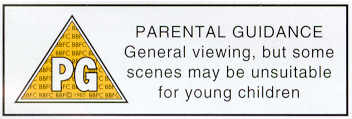
We have decided to give our film the rating of PG. We wanted to keep the rating quite low so not to limit our target audience. Films of a similar genre such as Pride and Prejudice have also been given the PG rating. After looking at the BBFC website and seeing the description of the ratings and what recent films have been rated at we came to this conclusion as our film will have similar themes. For example St Trinians: The Legend of Frittons Gold is rated also as a PG due to mild sex reference. This would be the case in our film as we have the theme of romance. Another example is My Father My Lord which is again rated as a PG due to scenes of mild distress. This is another aspect that would affect the rating of our film as the distress the main protagonist portrays may be too distressing for young children.


Although in our trailer all the characters who appear are Caucasian I don't believe this will affect our overall appeal of the film and limit our audience. Other films set in the same time period such as The Duchess don't seem to feature non-Caucasian characters and The Duchess made £1,402,200 at the box office in the first weekend so I don't believe this factor affected the films appeal. The reason why non-Caucasians appear in films set in this era is that multi-ethical societies were nonexistent.

Our film will mostly appeal to females due to the themes of romance and drama but also the stereotypical view that Period Drama's are the female domain. We understand that we haven't necessarily incorporated a stereotypical male theme such as action-adventure but we don't think this will dramatically limit our audience. A film that supports this view is Pride and Prejudice which made £2,529,947 in the opening weekend. Pride and Prejudice has similar themes to our film also one factor that appeared in Pride and Prejudice that we've tried to incorporate into our film is the dominant female main protagonist. This is where we're hoping that the male gaze theory will be applied and that this will be a pull factor for the male audience.

At first glance our film trailer would appear to be aimed at the upper class. This is due to the period drama theme which is frequently stereotyped as appealing mostly to the upper class. Our characters in the film are of upper class themselves and throughout the film the characters remain to be portrayed as upper class through costume and mise-en-scene such as the elegant ball gowns and the grand house. By doing this we avoid stereotyping the lower class. One of the main themes in the film is romance which is such a broad genre that we hope this will attract all audiences, whatever their class.

We have decided to not use a voice over in our trailer, we have also chosen not to use diegetic voices from scenes in the trailer. This is due to the fact that we want the trailer to be based on action rather than words and it avoids the problem of regional accents. If we'd decided to use voices we would have to deliberate over what accent would be suitable. If we chose a Yorkshire accent for example it may have limited our audience. Another factor is that without a voice over the trailer can be shown in countries such as America and not have to be adapted for American viewers.

Our film will almost most definitely appeal to fans of period dramas such as Pride and Prejudice, The Duchess and Vanity Fair. Although another audience that our film may tap into is fans of romantic dramas such as The Notebook.

Our film will probably appeal mostly to the heterosexual female. However it may attratct the 'pink pound' due to the theme of love and romance.

Our stereotypical individual that would be attracted to our film would probably be a female of middle class. As our film is a period drama they'd probably be interested in literature and history. This ties in with the film Pride and Prejudice and we hope that fans of this type of film will be attracted to our film.

Institutional Context

I have looked at three different period drama films in relation to their distribution and box office figures. This is so I can have a more in depth look at what would be in store for our film if it were to be released.

Pride and Prejudice was produced by many film makers but the most recognisable are Working Title who come under Universal Pictures. The involvement of Universal Pictures means that their is the basis for attracting the American audience as Universal Pictures is an American based film production conglomerate who owns Working Title. Working Title will therefore be involved with the distribution to the British market and Universal Pictures will be involved with the distribution in America. The involvement of such a large production company means the budget was $28,000,000 (estimated) which is quite a large budget meaning that well known actors could be used to attract it's target audience. These strategies to appeal and be able to distribute both in Britain and America was obviously a success as in the opening weekend the film took $2,865,017 in America and £2,529,947 in the UK.

The Duchess had a similar budget, however slightly smaller to that of Pride and Prejudice, £13,500,000. This again meant they could have well known actors such as Keira Knightley (who also appeared in Pride and Prejudice) and Dominic Cooper. Although there wasn't a production company as large as Universal Pictures their were still relatively developed and experienced ones such as Paramount and BBC Films. This is seen in the opening weekend takings in America it was only $190,426 which is quite low this maybe due to the fact that The Duchess's plot isn't as well known as the plot of Pride and Prejudice. The opening weekend in the UK was high but almost half of what Pride and Prejudice made at £1,402,200. One reason for the takings being lower for this film maybe that it didn't have a previous following as it might of had if it had been a piece of English Literature like Pride and Prejudice.

The budget for Vanity Fair was $23,000,000, again this budget is similar to that of the two previous films I've discussed. Two of the main production companies aren't extremely well known, they are Focus Features and Granada Films. From looking at the box office takings for the first weekend it is obvious that this film was a bigger success in America than in the UK. In America it took $6,268,925 in 1,051 screens and took only £204,693 in the UK in only 139 screens. This also shows the main emphasis was on the American audience.

All these films, as there quite big budget films, will advertise through websites such as YouTube and in more recent times on social networking sites such as Facebook and Twitter. They'll also publicise their films with posters on billboards and will set up their own individual websites for the film.

Teaser Poster


Coursework Options

We decided to choose the option where we could produce a Teaser Trailer. We chose this as the idea appealed to us more than producing a short film as it gives you more scope to be more imaginative and more of a challenge in terms of editing as you have to summarise a whole film in approximately 2 minutes. We also preferred the Ancillary Text productions options that accompanied the Teaser Trailer option.


Media Course Work Options

Final Proposal

Genre: Romantic period drama
Setting: Early 19Th Century
Target Audience: 15+
Rating: PG
Music: Non-diegetic music, soft romantic
Locations: A field in the country
The woods
Outside a grand house
Casting: A woman in her late teens woman
A young man in his mid-twenties
A young woman in her mid-twenties

Emeline is a young woman who goes out for a walk in the countryside. She falls and a young gentleman comes to her rescue. They spend some time together and Emeline instantly falls in love with the young gentleman. Although she is left heart broken when the gentleman leaves without giving his name. Emeline believes she's lost her true love and will never meet anyone else like the mysterious young gentleman.

Some months later, still pining for the gentleman, she attends a Ball where her friend introduces her to her husband to be. The husband to be is the same gentleman who Emeline believes to be the love of her life. Emeline now understands why the young gentleman was so mysterious and is left devastated. The young gentleman confesses to Emeline that he feels the same way, that he loves her. Both decide they have to be together but the consequences would be devastating. The only choice they have is to leave all that they know behind.

The trailer will show what we believe to be the most crucial parts of the story. There will be scenes of when Emeline fist meets the young gentleman, when he leaves her without giving his name, when she discovers that he is engaged to her friend and when she is reunited with him.

Anamatic

Assessment Criteria

This is the OCR Media Studies Specification, on pages 70 to 75 you can find the syllabus of how the prouction/coursework is marked, and how the marks are divided up.


Media Spec

Monday, 16 November 2009

Soundtrack

We are currently still trying to find a composer to produce a piece of music to accompany our trailer. More details to follow...

Storyboard

Currently I cannot upload the storyboard onto my blog but please find below the link to the first page of our storyboard

https://blogger.googleusercontent.com/img/b/R29vZ2xl/AVvXsEhTAFiSQv3MhMrN0D_cU7a934Ol0kbsTC-zrpwImH2i2ghoJPyKxR1IbjWjlN_cOulVQz20crtRT4NhH7tBuoBuyJVVUq5TKmVVOiiGVMvBKpOIpHEWU4SlVujx1zrKSqX1MNDQqGX8dmgP/s1600-h/scan0001.jpg

The remaining pages of the storyboard (2 pages) can be found on the link below (this is my colleagues blog with whom I've worked with on this project)

http://megansa2blog.blogspot.com/2009/12/storyboard.html


  • Close up of a letter
  • Logo
  • Extreme long shot of her in the woods
  • A Spotlighted Production
  • Medium shot of man
  • Introducing actors name
  • High angle her looking up to camera from floor
  • And Brooke Shipley
  • Over the shoulder shot (mans shoulder) of her laughing
  • Extreme long shot of her walking towards camera
  • Over the shoulder shot of him walking away
  • Medium shot of her stood outside the Hall in the dark looking sad
  • Text
  • Side angle shot of her beginning to run
  • Side long shot of the man and the woman’s friend opposite the woman
  • Extreme long shot of her with her back to the camera walking away and the man going after her and grabbing her hand
  • Text
  • Long shot rear view of her running away from the camera
  • Side view close up of her and him looking at each other and him touching her hair
  • For All I Know
  • Begins as long shot front view of her running towards the camera suddenly slowing until she reaches the camera – extreme close-up of her face
  • Coming Soon

Sunday, 15 November 2009

Image for teaser poster

We took many different photographs so that we could experiment with what would work best for our teaser poster. We finally decided to use the image below as we believe that the pillars either side of the main female protagonist frame the image effectively.


Final Locations


We have chosen the main setting for our film trailer. We've chosen to film our trailer on the Bolton Abbey estate. We've chosen this location due to it's unspoilt landscape which gives anchorage to the countryside setting but also makes it easier to keep the mise-en-scene simple so that their is no evidence of modern day life and therefore in keeping with an early 19th Century setting.


In our trailer the main protagonist will appear outside her house. We wanted it to appear upper class but understated, fitting with the countryside setting and the everyday life that she leads.


Also in our trailer the main protagonist attends a Ball. Obviously due to the early 19th Century it would be nearly impossible to find an inside location to fit with this era so we have decided to film this section of the trailer outside the venue of the Ball. We chose this location due to it's grand appearance which will fit the occasion but along with the greenery still signifies the countryside.

Genre Research

Genre Research Table

Wednesday, 11 November 2009

Deadlines for A2 Coursework

Monday 16th November

  • Complete main pre-production tasks

Casting details

Location scouting

Soundtrack

Storyboard

1st draft of screenplay

Costume/props/makeup requirements

Production schedule

  • Presentation on my project
  • 2nd Weekly podcast

Friday 27th November

  • All material outlined in the storyboard/screenplay recorded and uploaded ready to be edited
  • Outline draft idea for accompany piece (eg: magazine article, DVD covert etc...)
  • Draft post-production schedule: re-shoots

Podcast 5/11/09

Monday, 9 November 2009

Useful websites for genre research


These websites have been very useful for my genre research. One has a timeline of all Period (costume) Dramas giving the dates of the setting of the films. This means that I can look at film trailers with a similar time setting that we have planned for our film.
These websites have been very useful for my genre research. One has a timeline of all Period (costume) Dramas giving the dates of the setting of the films. This means that I can look at film trailers with a similar time setting that we have planned for our film

Wednesday, 21 October 2009

Request for a composer for our film


  • Tittle:

  • We're doing a teaser trailer, approximately a minute long

  • Synopsis: A film set in the early 19th century about a young woman who meets a gentleman who she instantly falls in love with but he leaves before she can discover his name. She later discovers that he's marrying her best friend. The young woman and gentleman decide they have to be together but they'll have to leave their current lives behind.

  • Genre: Romantic period drama

  • Comparable to: Pride and Prejudice meets Sliding Doors

  • What type of music we'd like: Obviously with our film being set in the early 19th century we don't want anything modern, possibly piano or strings. We'd like it to be romantic and reminiscent. Possibly something similar to the music used in Pride and Prejudice the film.

  • Blog address: lornasa2bloggy@blogspot.com

Music

For our trailer we'd like a romantic melancholy composed piece of music that would fit in with our early 19th century setting. We thought that due to the fact that our time setting is quite unusual it might be best to have someone compose a piece of music for us rather than try and find a copy right free piece that already exists that fits our trailer. We also thought it would be more personal and specific to our trailer and could add something very special and affective to the trailer.

Actors

Our main female protagonist needs to have a look of innocence and youth. Our actress who has appeared in various Upstagers productions is perfect for this role. She has the curled hair that fits with the style of the early 19th century and she is also very petite which seemed to be common among wealthy upper class young women in that era.

Our main male protagonist needs to be an imposing character. He needs to have dark hair and have a somewhat conspicuous look. Although he also needs a softer side that is protective of the ones he cares and loves for.

We're still in the process of casting our main male protagonist so details on this will follow.

Mise-en-scene

The mise-en-scene is vital for our teaser trailer due to the period drama genre. We need to ensure that no modern day features are seen in the background. We plan to ensure this by filming all our scenes outside. This will limit the chance of any modern day fixtures being seen in the mise-en-scene and it is very unlikely we could find an inside location with early 19th century fixtures. The only possible place to find this sort of location with the correct mise-en-scene would be somewhere like a National Trust stately home but it would be nearly impossible for us to get permission to film somewhere like this.

Below is a podcast with further details about the mise-en-scene of our teaser trailer.

Make-up

For our main protagonist, the young woman we would like the make-up to be quite youthful to signify her innocence similar to that of Kiera Knightley's in Pride and Prejudice. Rosy cheeks may also be a interesting concept to play with do to her immaturity that may be visible and the embarrassment that she may feel. Although we want to reach a youthful look we still would like the make-up to be visible as our main protagonist is of upper class.

Make-up will not be especially needed for the male protagonist although possibly powder to reach a more pale look.

Costume


As our film is set in the early 19th Century it's vital we get the costume correct. This means allot of research is needed to be done into the costume. We are aiming to borrow costume from the local acting group - upstagers.


Women's Costume
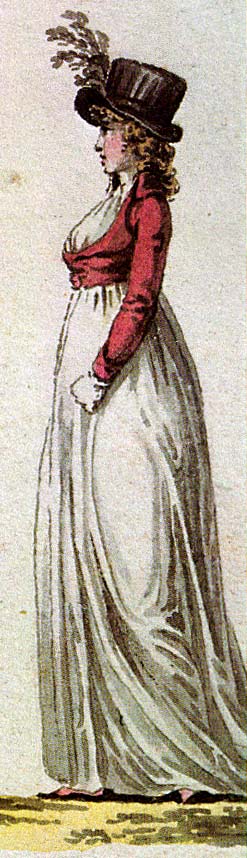
Here are some of the usual codes of dress for women between 1795 - 1820 which is the time setting of our film:
  • Laced corsets were abandoned in favour of of high waisted dresses, similar to the natural figure
  • The main clothe styles were based on the Empire Silhouette, dresses were close fitting just below the bust then falling loosely to the ground
  • The dresses usually had soft flowing skirts and usually white almost transparent muslin
  • As our main protagonist is of Upper class we need to look at the difference between morning dress and evening dress which was a must for women of this status
  • As our main protagonist is a young woman we need to concentrate on making her appear like this, young women wore softer shades of colour such as pinks, light blues and lilacs
  • The hairstyle for our main protagonist is vital. The style was mass curls worn over the forehead and ears, with longer hair drawn into a loose bun

Men's Costume
Here are some of the normal codes of dress for men between 1795-1820:
  • Cut and tailoring became allot more important as it was seen to show quality
  • Tightly fitted leather riding breeches reached to the boot tops and were replaced by trousers for more informal wear
  • Coats were short at the front and had a tail behind and had a tall standing collar
  • Shirts were made of linen with a collar and usually worn with a cravat tied in various styles
  • Waistcoats were usually high wasted and squared off at the bottom
  • Older men wore wigs still but younger men tended yo have their hair short with curls and long side burns
The podcast below gives more detail on the choice of costume for the teaser trailer.